βœ‰οΈ rankandrent2+water-damage-tennessee@gmail.com
Nashville, TN Β· Cumberland River Region Β· Statewide Referral Network

Basement Water Damage in Tennessee

The basement is where Tennessee water goes to hide β€” and where it does the most quiet damage. One call connects you with a local pro for pumping, drying, and sorting out the cause so it does not simply happen again.

πŸ’§ Water in your home right now?

Talk to the Tennessee team

Tell us how much water is down there, whether the sump is running, and whether it is still rising. We match the job with a local pro, and the pro confirms the scope with you before work begins.

πŸ“ž Call Now Prefer email? Write to us β†’

No forms, no obligation. A referral service β€” not a direct service company.

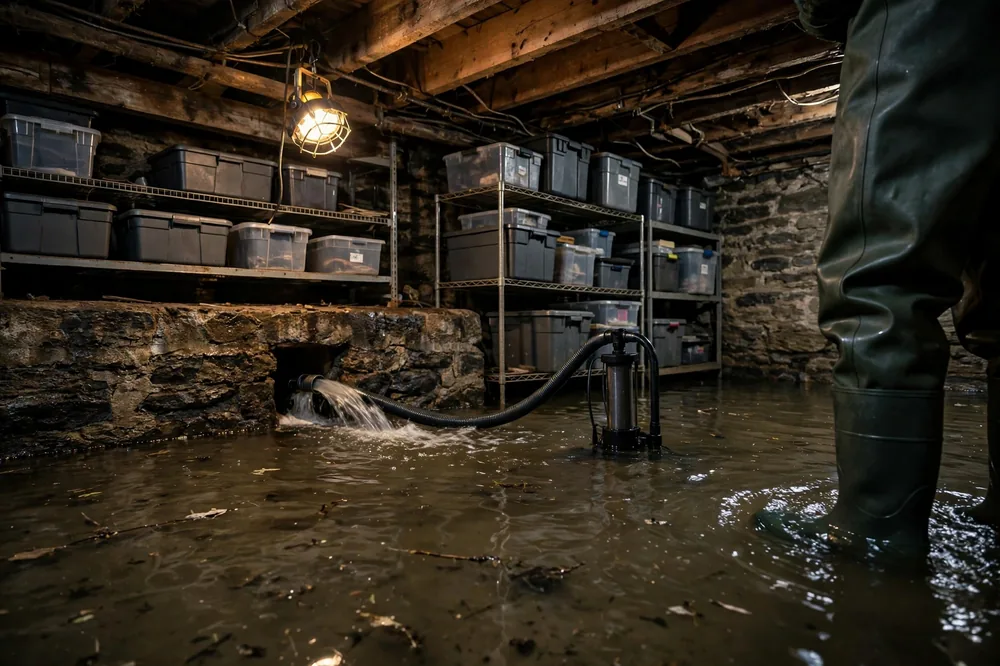
Flooded Tennessee basement with standing water and a sump pump hose at work
The state's most common call

Understanding Basement Water Damage in Tennessee

More water damage calls start in the basement than anywhere else in the house, and the reasons are structural. The basement is the lowest point, wrapped in foundation walls that sit in Tennessee soil β€” much of it clay that holds water against the concrete after every rain. Add a sump pit that collects what the drain tile gathers, a water heater and laundry in the same space, and supply lines overhead, and the basement becomes the meeting point of every water risk the home has.

The pattern differs across the state. In East Tennessee β€” Knoxville, Maryville, the Tri-Cities β€” full basements are common and often finished, so water meets carpet, drywall and furniture. In Nashville's older neighborhoods, stone and block foundations seep after creek-rise rains. West Tennessee homes more often sit on crawl spaces, but the basement homes around Memphis take on Mississippi-influenced groundwater in wet springs. The crew's job is the same everywhere: get the water out, dry the structure, and identify which of the usual suspects β€” sump failure, seepage, drain backup, plumbing β€” actually did it.

That last step is what separates a cleanup from a fix. A basement pumped and dried without a cause identified is a basement waiting for the next storm. The intake and the first walk-through both hunt for the source: a pump that failed or was overwhelmed, a discharge line frozen or blocked, cracks and seams that weep, a floor drain tied to an overloaded line. You get the cleanup and the explanation together.

  • Pumping, extraction and drying in one visit sequence
  • Cause identified β€” sump, seepage, drain or plumbing
  • Finished basements handled as living space, not storage
  • Moisture verified in walls and floors before equipment leaves
What is covered

What Our Basement Water Damage Service Includes

From the first pump to a dry, explained basement.

Standing water pumping and extraction

Bulk water out by pump, then extraction passes over floors, carpet and low spots until the tools stop pulling meaningful water.

Cause investigation

Sump operation, discharge lines, foundation seams, floor drains and overhead plumbing are all checked, so you learn what actually happened β€” not just that it did.

Contents protection and sorting

Stored items and furniture are moved up, blocked or assessed. What is wet is photographed before decisions are made about it.

Structural drying of the basement box

Walls, floors and framing dried with equipment placed from readings, including the bottom of finished walls where damage hides.

Cleaning and treatment

Surfaces cleaned after drying; antimicrobial treatment applied where the water category or visible growth calls for it.

Repair of finished spaces

Once dry readings verify, drywall, flooring and trim in finished basements are repaired as the finishing phase of the same job.

Step by step

Our Basement Water Damage Process

Five steps, with the cause hunt built into the middle of them.

Describe the depth, whether the sump runs, and whether water is still entering. Depth and source decide the pump capacity and crew the job gets.
Bulk water out first, working from the lowest point. Extraction follows over every surface, and contents are lifted clear as the floor emerges.
With the water down, the crew reads the evidence: pit, pump, discharge, seams, drains, stains that mark old paths. You hear the finding the same visit.
Equipment is placed from moisture readings in walls, floors and framing, then rechecked on return visits until the basement reads dry and stable.
Surfaces are cleaned and treated, damaged material is repaired or replaced, and a final moisture check closes the job with the log to prove it.
Tools & methods

Tools & Methods for Basement Work

Basements reward crews that bring depth capacity and diagnostic patience.

Submersible pumps and flood pumpers

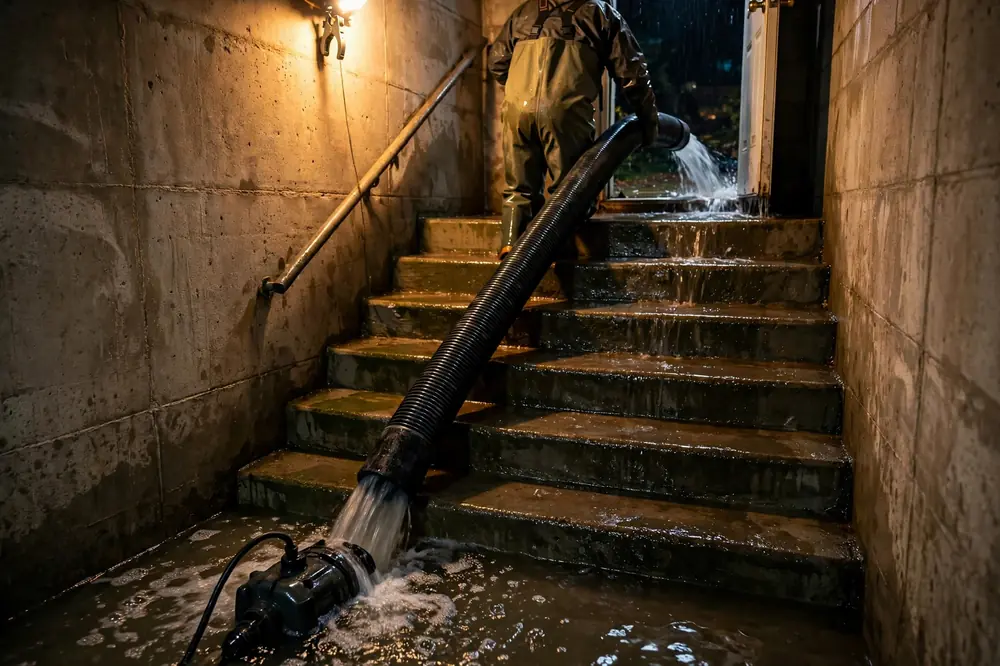
Continuous-duty pumping for depth, with portable extraction for the last fraction of an inch that pumps cannot reach.

Moisture mapping of the foundation box

Readings at wall bases, floor seams and framing find the seepage paths and confirm when the whole box β€” not just the visible floor β€” is dry.

Drying in a below-grade space

Basements dry differently: cool, still air and concrete that holds moisture. Dehumidification capacity is sized up accordingly, and air is moved along walls, not just across the room.

Submersible pump hose carrying water up and out of a flooded Tennessee basement
Change you can see

Before and after.

How Tennessee basements look at the bottom of the stairs, and after the work.

Before

Finished basement after a sump failure

Carpet soaked wall to wall, family room furniture sitting in water, musty smell starting.

After

Basement dry and back in use

Water out, pad replaced, walls dried at the base, cause explained and the room returned to the family.

Before

Unfinished basement after heavy rain seepage

Puddles along the foundation walls, stored boxes soaked from below.

After

Basement dry and sorted

Water extracted, boxes inventoried and lifted onto shelving, seepage points identified for the fix conversation.

Before

Basement after a water heater let go

Forty gallons across the floor and under everything stored nearby.

After

Basement recovered

Water out, affected items dried or documented, floor and wall bases verified dry by meter.

Problems Solved by Our Basement Water Damage Services

Basement work exists to end three patterns that otherwise repeat.

01

The flood that comes back every spring

Pumping without diagnosis invites a repeat. Identifying the failed pump, the blocked discharge or the seeping seam is what turns a yearly emergency into a solved problem.

02

Finished space quietly rotting

A finished basement can look recovered while wall cavities stay wet for weeks. Meter-verified drying at the wall base is what protects the finish you paid for.

03

Stored belongings lost by inches

Cardboard on a basement floor wicks water into everything above it. Fast pumping plus lifting and sorting saves the contents that a slower response loses.

πŸ“ž Call Now

Scope factors

What Decides the Scope of a Basement Job

Depth, finish and cause set the plan.

Finished or unfinished

A finished basement multiplies both care and scope: flooring, drywall and contents all enter the plan. Bare concrete forgives more and dries faster.

Depth and duration

Inches for a day and a foot for a weekend are different jobs in extraction time, material loss and drying length.

The cause itself

A dead pump is a swap and a cleanup. Foundation seepage may add exterior or drainage conversations. A drain backup adds contaminated-water handling to the whole job.

What is stored down there

Workshops, freezers, archives and holiday storage each change the contents work β€” and the value of moving fast.

Good questions

Basement Water Damage Questions

Sumps, seepage and what usually has to come out.

Ask Your Question

Usually one of three routes: the sump system is overwhelmed or has failed, water is seeping through foundation seams and cracks under pressure from saturated clay soil, or a floor drain is backing up from an overloaded line. Often it is a combination β€” heavy rain raises the water table, the pit fills faster than the pump cycles, and the excess finds the lowest seam. A cleanup visit that includes cause investigation can tell you which route your basement took.
The removal list starts with carpet padding, because it holds water against the subfloor and cannot be dried in place. Baseboards are pulled so wall cavities can dry, and the lower drywall comes out only when readings stay high after extraction and drying begin. Carpet itself often survives clean-water events. Everything removed is photographed first β€” for your records and your claim.
If the pump failed mechanically, yes β€” promptly, before the next rain tests the pit again. If it was simply overwhelmed, the conversation is about capacity and a battery backup, which keeps pumping through the power outages that arrive with big storms. Either way, test the new setup with a bucket of water, and check that the discharge line runs well away from the foundation and is not blocked or frozen.
By readings, not by feel. Concrete and wall bases can feel dry while holding moisture deep inside. The crew logs moisture at the same points across visits; the job is dry when those numbers reach a normal, stable range. Ask to see the log β€” a good pro expects the question.
Keep exploring

Related Services

Nine other ways the network helps Tennessee homes after water gets in.

One call starts it

Need Basement Water Damage Help in Tennessee?

Tell us how much water and whether it is still coming in. We will match your job with an independent local water damage professional who serves your city.

πŸ“ž Call Now
Get in touch

Contact Us for Basement Water Damage

Calls are the fastest route β€” water does not wait for inboxes. Email works too if the situation is stable and you are planning ahead.

πŸ“ž

Call β€” describe the job

One call is the whole intake: where the water is, what caused it, when it started. We match the job locally from there.

πŸ“ž Call Now
βœ‰οΈ

Email the details

Stable situation, planning ahead? Send photos and a short description and we will line up the right local pro.

rankandrent2+water-damage-tennessee@gmail.com
πŸ•–

Hours β€” Central Time

Mon–Fri 7 AM–10 PM Β· Sat 8 AM–10 PM Β· Sun 7 AM–9 PM (Central Time). Water does not keep office hours, and neither does the damage it causes β€” call as soon as you find it inside those hours and we will get the match moving.

See service areas β†’

One call, and the match is made

Tell us what happened once. An independent local water damage professional confirms the scope and the cost with you before any work begins β€” no obligation, no pressure.

πŸ“ž Call Now
πŸ“žWater damage?Call Now