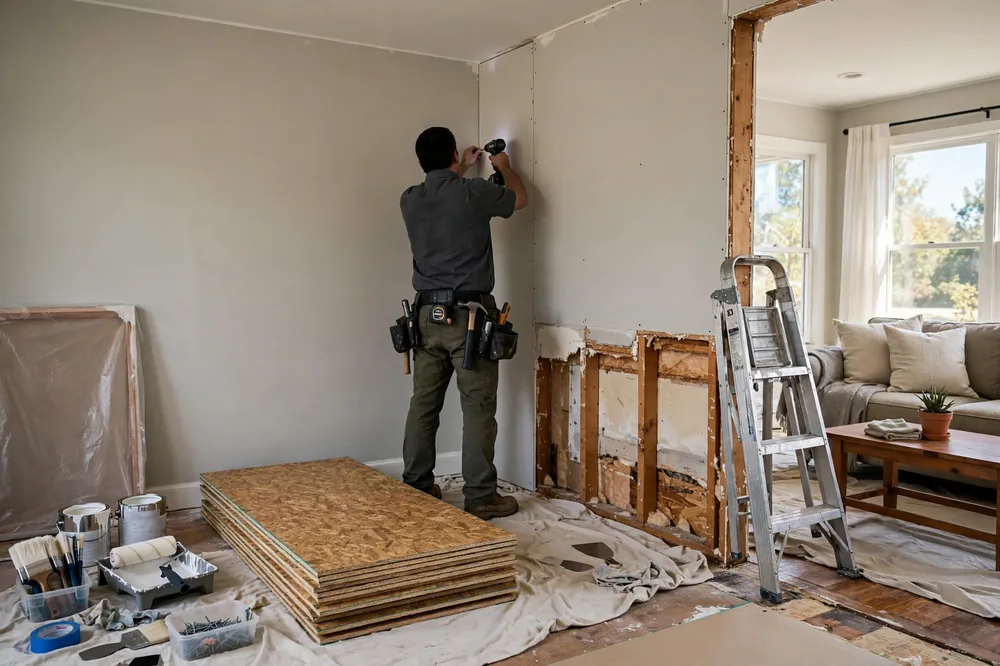
Repair is the phase that makes the house whole again β drywall, flooring, trim and paint after drying has been verified. One call connects you with a local pro who finishes what the water started.
Tell us what was damaged and whether the area has been dried and verified. We match the job with a local pro, and the pro confirms the scope and cost with you before any work begins.
π Call Now Prefer email? Write to us βNo forms, no obligation. A referral service β not a direct service company.

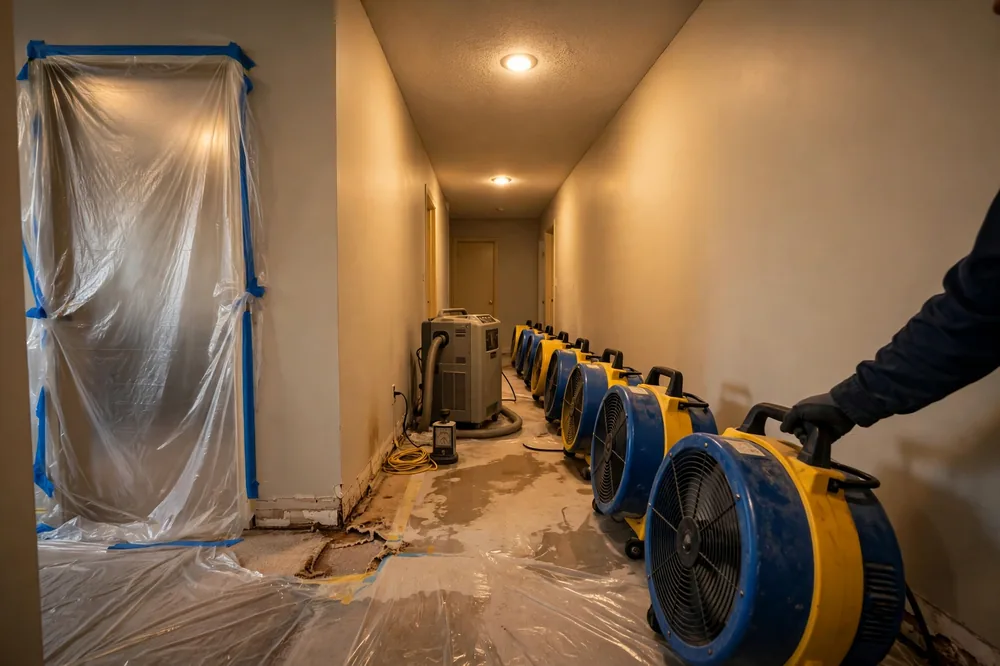
Repair begins where mitigation and drying end β and the discipline of the whole job is that it must not begin sooner. Drywall hung over a damp cavity, or flooring laid over a subfloor still holding moisture, traps the problem inside the new work. That is why repair in this service is gated on a verified dry reading, not on how the surface feels or how long the fans have run.
The repair list after Tennessee water events is familiar: drywall sections at the base of walls where flood cuts were made, full sheets where ceilings took water, flooring from a single room of hardwood to whole levels of carpet and pad, cabinet bases and toe-kicks, baseboards and trim, and the paint that ties it together. Matching matters β an older Nashville home's plaster and trim profiles, a newer Franklin suburb's finishes β and a good repair pro talks honestly about what will match closely and what will be a visible patch line.
Repair is also where the documentation pays off a second time. The photos and scope notes from the first visit show exactly what was removed and why, which guides the rebuild list and supports the claim's repair portion. Homeowners who skipped that record often find themselves arguing from memory; this service's jobs never have to.
The finish trades, sequenced after drying and done as one job.
Flood-cut sections, ceiling patches and full sheets are hung, taped and finished to a paint-ready surface, with texture matched to the surrounding wall.
Hardwood sections, engineered and laminate floors, tile and carpet with new pad β replaced where drying could not save the original, blended at natural breaks.
Swollen cabinet bases, toe-kicks and built-ins are repaired or replaced, with doors and finishes matched as closely as materials allow.
Baseboards pulled for drying go back or are replaced; swollen trim and doors are planed, repaired or renewed to close and look right.
Primed with stain-blocking primer where water marked the surface, then painted to blend with the room β walls and ceilings both.
A closing moisture check across the repaired areas and a room-by-room walk-through with you, so the job ends verified, not assumed.
Five steps that protect the new work from the old water.
Repair quality shows in the matching and the sequencing.
The meter is the gatekeeper: no drywall closes a cavity and no flooring covers a subfloor until readings say the structure underneath is dry.
Flooring is blended at doorways and natural breaks; drywall texture is test-matched on a sample area; paint is feathered so patch lines disappear in normal light.
Zipper barriers, floor protection and daily cleanup keep a repair zone from colonizing the rest of the house while the work runs.

How repaired rooms look against the damage that preceded them.
Bottom two feet of drywall removed, framing exposed, room out of use.
New drywall finished and textured to match, baseboards back, paint blended across the wall.
Cupped, lifted boards in the middle of an otherwise sound floor.
Damaged section replaced and laced into the existing boards, finish matched so the repair reads as one floor.
Toe-kick swollen and soft, cabinet floor warped inside.
Damaged base rebuilt, doors aligned, interior floor replaced β storage back in service.
Repair exists to close the job β properly, this time.
The most expensive repair mistake is covering a damp structure. Verified-dry gating means the rebuild never becomes the next mold job.
Mismatched texture, visible floor transitions and paint lines announce a repair forever. Matching discipline and blending at natural breaks keep rooms reading as whole.
Water jobs stall when the drying company leaves and no one owns the rebuild. A repair phase under the same match carries the job to an actual end.
The removal record and the finishes set the rebuild list.
The documented demolition list β flood cuts, flooring sections, cabinet parts β is the skeleton of the repair scope. More removal means more rebuild.
Builder-grade finishes and custom millwork are different repair worlds in matching time, materials and care.
Discontinued flooring, aged paint and settled trim all affect what 'matching' can honestly mean β the pro will show you the options rather than promise the impossible.
Occasionally the repair phase reveals framing or subfloor damage the water hid. It is documented and discussed before any added work proceeds.
Timing, matching and how repair follows drying.
Nine other ways the network helps Tennessee homes after water gets in.
Tell us what was damaged and whether drying is verified. We will match your job with an independent local water damage professional who serves your city.
π Call NowCalls are the fastest route β water does not wait for inboxes. Email works too if the situation is stable and you are planning ahead.
One call is the whole intake: where the water is, what caused it, when it started. We match the job locally from there.
π Call NowStable situation, planning ahead? Send photos and a short description and we will line up the right local pro.
rankandrent2+water-damage-tennessee@gmail.comMonβFri 7 AMβ10 PM Β· Sat 8 AMβ10 PM Β· Sun 7 AMβ9 PM (Central Time). Water does not keep office hours, and neither does the damage it causes β call as soon as you find it inside those hours and we will get the match moving.
See service areas βTell us what happened once. An independent local water damage professional confirms the scope and the cost with you before any work begins β no obligation, no pressure.