βœ‰οΈ rankandrent2+water-damage-tennessee@gmail.com
Nashville, TN Β· Cumberland River Region Β· Statewide Referral Network

Emergency Water Removal in Tennessee

Water rising, spreading, or pouring right now is a different kind of call. One call describes the emergency once and connects you with a local pro equipped for fast extraction of an active loss.

πŸ’§ Water in your home right now?

Talk to the Tennessee team

Tell us where the water is, how fast it is moving, and whether the source is stopped. We match the job with a local pro equipped for emergencies, and the pro confirms the scope with you before work begins.

πŸ“ž Call Now Prefer email? Write to us β†’

No forms, no obligation. A referral service β€” not a direct service company.

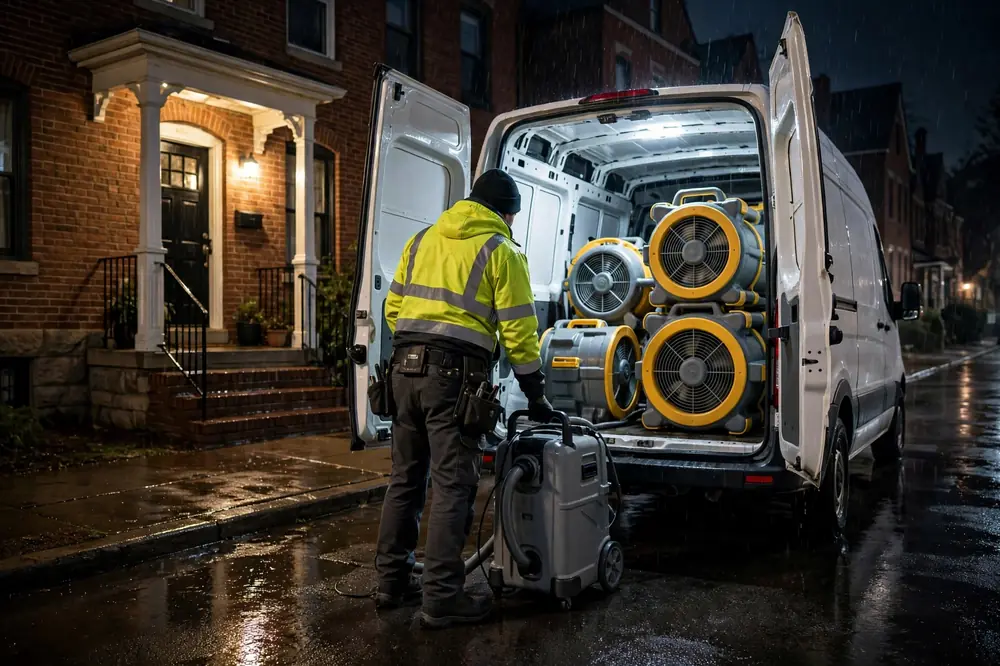
Restoration worker unloading extraction equipment outside a Tennessee brick home at night
For water moving now

Understanding Emergency Water Removal in Tennessee

Emergency water removal is extraction performed against a clock that is still running. The basement is filling while the storm continues. The supply line is spraying until the valve is found. The creek is at the door. In each case, the value of the response is measured in what it prevents: every inch kept out of the walls, every hour of soak time cut short, is material saved and drying shortened on the other side.

Tennessee's emergencies cluster around weather and winter. Spring storm systems park over the state and drop rain faster than creeks and storm drains can carry it β€” Nashville, Clarksville and Chattanooga know this pattern well. Cold snaps split pipes that announce themselves at the thaw, often in empty houses and overnight. And the Mississippi and Tennessee rivers give Memphis and the river counties a slower, larger kind of emergency, measured in days of rise rather than minutes.

The emergency phase has its own priorities, in strict order: safety of people first, then stopping or slowing the source, then extraction, then protection of what is still dry. Documentation still matters β€” a phone camera from the doorway takes thirty seconds β€” but it never outranks a live electrical hazard or a rising floor. A crew that works emergencies thinks in that order automatically, which is most of what you are calling for.

  • Safety first β€” power and water hazards assessed before entry
  • Source stopped or slowed as the first working step
  • Extraction capacity matched to an active, not finished, loss
  • Dry areas protected while the wet ones are fought
What is covered

What Our Emergency Water Removal Service Includes

Speed with order: the emergency sequence, executed without panic.

Emergency intake and priority match

The call captures depth, rate of rise and source status, and the match is made on emergency capacity β€” pumps, crew and proximity to your part of Tennessee.

Hazard check on arrival

Electrical risks, structural concerns and contamination are assessed before anyone wades in. Gas appliances sitting in water and live panels change the plan, correctly.

Source control support

If the source is a plumbing failure and the valve has not been found, locating and closing it is the crew's first working act, before extraction begins.

High-volume pumping and extraction

Pumps and extraction systems sized for active water move volume continuously, working the low points and staying ahead of inflow where inflow continues.

Protection of unaffected areas

Furniture is lifted or moved, doorways and dry rooms are protected, and contents at risk are carried up and out of the water's path.

Transition to mitigation and drying

Once the water is controlled, the job flows straight into the standard sequence β€” readings, drying placement, documentation β€” without a second search or a lost day.

Step by step

Our Emergency Water Removal Process

Five steps run at emergency pace, in emergency order.

Say where the water is, how deep, and whether it is still coming. If it is a pipe and you do not know the shut-off, the call itself is the fastest way to find it.
Power, gas and structure are checked; the source is stopped or slowed. Only then does the crew commit to the water.
Bulk water comes out at capacity, starting at the lowest point, while a second pair of hands protects contents and dry rooms.
With the water controlled, extraction finishes to the last practical gallon and surfaces are meter-checked so the loss map is real.
Drying equipment is placed from the readings and the documentation is completed β€” the emergency becomes a managed job, not a second emergency tomorrow.
Tools & methods

Tools & Methods for Emergency Removal

Capacity and readiness are the whole toolkit here.

Continuous-duty pumps

Pumps that can run for hours against continuing inflow, with discharge routed far enough away that the water cannot return.

Truck-mounted extraction volume

High-capacity extraction clears large floors and keeps pace in big spaces where portable units alone would fall behind.

Readiness discipline

Emergency work is won before the call: fueled pumps, charged meters, protective gear on the truck. The pro matched to your job carries that standard.

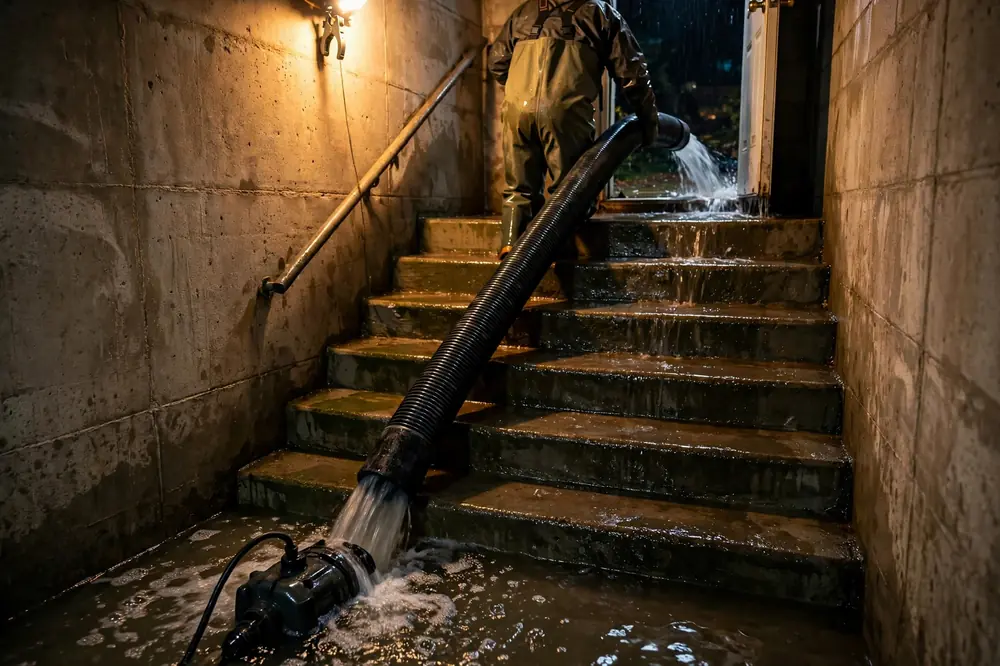
Submersible pump hose carrying water up and out of a flooded Tennessee basement
Change you can see

Before and after.

How emergency scenes look at the worst moment, and once controlled.

Before

Basement filling during a storm

Water rising over the floor, sump overwhelmed, boxes starting to float.

After

Basement controlled and drying

Inflow managed, bulk water out, contents lifted and sorted, drying placed from readings.

Before

Pipe spraying in a wall cavity

Water running from outlets and baseboards, ceiling below beginning to sag.

After

Source closed, water extracted

Valve closed, trapped water released in a controlled way, cavities opened and drying started.

Before

Creek water at the door

Water entering at thresholds, ground floor taking on inches.

After

Ground floor defended and cleared

Entry points managed, water extracted as it recedes, contaminated-material handling begun.

Problems Solved by Our Emergency Water Removal Services

Emergencies punish delay in three specific ways.

01

Soak time that decides salvage

Floors, cabinets and drywall have a soak budget measured in hours. Emergency extraction spends the response on the right side of that budget.

02

Secondary damage beyond the water line

Rising water takes out furnaces, water heaters, electrical systems and stored contents in sequence. Fast control protects systems the flood has not reached yet.

03

Panic decisions in the first hour

Homeowners in rising water move heavy furniture, wade near panels and throw out undocumented belongings. A crew working to a sequence prevents the injuries and the claim damage alike.

πŸ“ž Call Now

Scope factors

What Decides the Scope of an Emergency Removal Job

Inflow is the variable that sizes everything.

Whether water is still entering

A stopped source makes a finite job; a continuing inflow makes an operation β€” capacity, shifts and discharge all scale to the rate of rise.

Depth and spread across the home

A utility room and a whole ground floor are different emergencies in crew size, equipment count and protection work.

Systems in the water's path

Furnaces, panels, water heaters and appliances in the zone add safety steps and specialist coordination to the response.

Access during the event

Storm conditions, road flooding and power outages shape staging β€” the plan accounts for them rather than discovering them.

Good questions

Emergency Water Removal Questions

What to do in the first minutes, and what the crew does on arrival.

Ask Your Question

Three things, if they are safe: keep people and pets out of the water, especially near anything electrical; stop the source if it is plumbing and you know the valve; and take doorway photos of each affected room. Move only small, light valuables you can carry without wading deep. Skip the rest β€” soaked furniture is heavier than it looks, wet stairs are slick, and the crew is equipped for exactly the work that is risky for you.
It depends on what the water has reached. If water has touched a live electrical panel, outlets or appliances, or if a gas appliance is sitting in water, the safe answer is to leave and let the crew and, where needed, the utility make it safe. For a contained plumbing flood with power secured to the area, staying upstairs is usually fine. When in doubt, describe the scene on the call and take the advice you are given.
It depends on where you are in Tennessee, road and weather conditions, and how many emergencies the storm is making at once β€” anyone who promises a minute count in a flood is guessing. What this service controls is the sequence: one call, a match made on emergency capacity and location, and a pro who confirms the plan with you directly. Describe the situation fully on the call; urgency and depth are what get a job prioritized.
The emergency phase ends with the water controlled and extracted. From there the same matched job continues into mitigation, drying and, where needed, repair β€” the phases are sequenced, not re-shopped. You will always know which phase the work is in and what the next one involves, because the pro confirms scope with you as the job moves.
Keep exploring

Related Services

Nine other ways the network helps Tennessee homes after water gets in.

One call starts it

Need Emergency Water Removal in Tennessee?

Tell us where the water is and whether it is still coming in. We will match your job with an independent local water damage professional who serves your city.

πŸ“ž Call Now
Get in touch

Contact Us for Emergency Water Removal

Calls are the fastest route β€” water does not wait for inboxes. Email works too if the situation is stable and you are planning ahead.

πŸ“ž

Call β€” describe the job

One call is the whole intake: where the water is, what caused it, when it started. We match the job locally from there.

πŸ“ž Call Now
βœ‰οΈ

Email the details

Stable situation, planning ahead? Send photos and a short description and we will line up the right local pro.

rankandrent2+water-damage-tennessee@gmail.com
πŸ•–

Hours β€” Central Time

Mon–Fri 7 AM–10 PM Β· Sat 8 AM–10 PM Β· Sun 7 AM–9 PM (Central Time). Water does not keep office hours, and neither does the damage it causes β€” call as soon as you find it inside those hours and we will get the match moving.

See service areas β†’

One call, and the match is made

Tell us what happened once. An independent local water damage professional confirms the scope and the cost with you before any work begins β€” no obligation, no pressure.

πŸ“ž Call Now
πŸ“žWater damage?Call Now