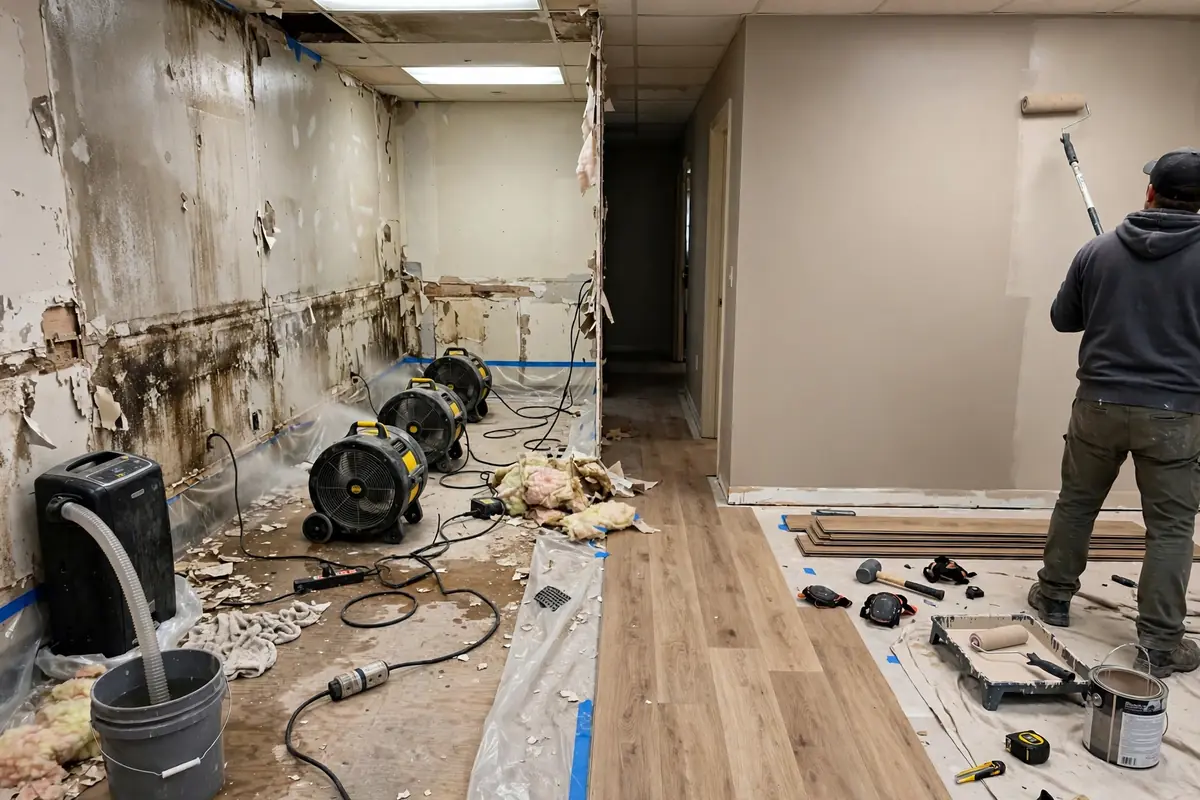
The short answer
For a contained, single-area loss — a bathroom leak caught early, one room of carpet — expect drying to run about three to five days, with repairs following over the next several days. For a multi-room loss, a flooded finished basement, or damage involving flooring and cabinets across a level, the full arc from first extraction to final paint commonly runs two to four weeks. Flood events with contaminated water sit at the long end, because more material comes out and more has to be rebuilt.
Those ranges are not evasions; they are the shape of the work. Restoration time is set by physics (how fast materials release water), by scope (how much was touched), and by sequence (repairs cannot start until drying verifies). The sections below break the timeline into its real phases, so you can place your own job on it.
Day one: mitigation and extraction
The first day is the most active. The source is confirmed stopped, the area is made safe, standing water is extracted, furniture is moved or protected, and drying equipment is placed. By the end of day one, a good job has photographs, moisture readings at every wet point, and a drying plan — the three artifacts the rest of the timeline runs on.
Day one is also when the timeline becomes predictable. The first readings tell the crew the load they are drying against, and an experienced pro can give you a realistic range for the drying phase before they leave. Treat any timeline promised before those readings exist as a guess, because it is one.
Days two to five: the drying window
Drying is where most of the calendar lives. Air movers and dehumidifiers run continuously — stopping them at night genuinely sets the job back, since surfaces re-absorb moisture from the air the equipment spent all day drying, and Tennessee's ambient humidity makes that effect stronger here than in dry climates.
Each day, the crew returns to read the same points logged on day one. Equipment is moved toward the slow spots and removed from areas that have arrived. Most contained jobs reach their dry targets inside this window. The stubborn cases share a signature: water in wall cavities, layered flooring, or a crawl space — assemblies that release moisture slowly and need directed air rather than patience.
Week two and beyond: repairs
Repairs begin only when the log verifies dry — hanging drywall or laying flooring over a damp structure is how a restoration becomes a mold job with extra steps. Once cleared, the repair sequence runs: any framing or subfloor work, drywall, flooring, cabinets and trim, then paint. Material availability shapes this phase more than labor does; a matched hardwood or a specific cabinet door can set the schedule.
For larger losses, repairs are often phased so the household regains its most important rooms first — a bathroom and kitchen before the guest room. Ask your pro how they would sequence it; the answer tells you a lot about how they think.
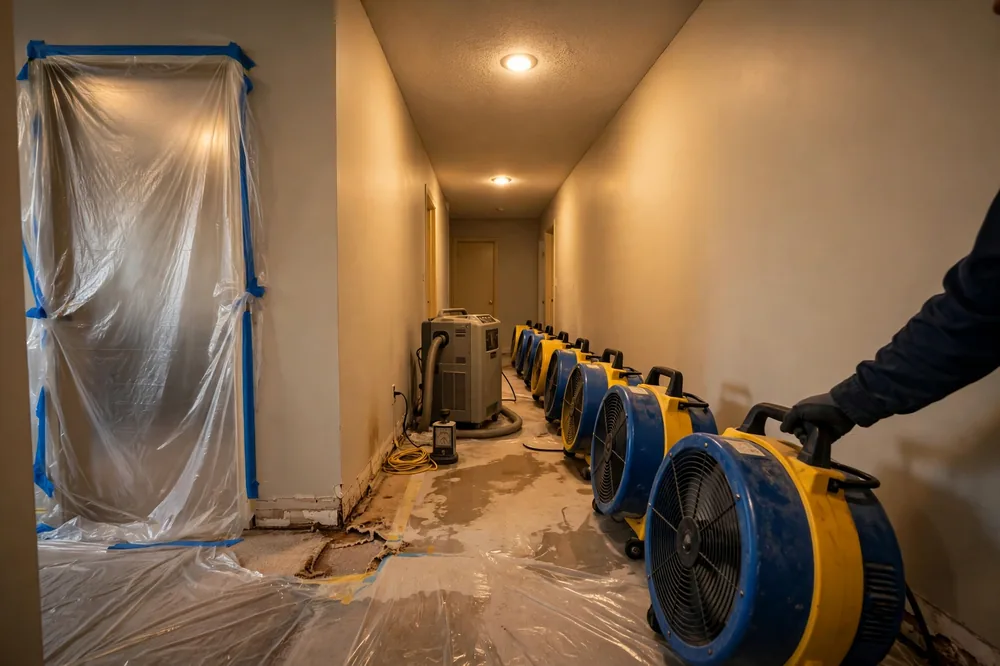
What stretches a timeline
Contaminated water is the biggest stretcher: flood and sewage events require material removal that clean-water jobs avoid, and every removed wall section or floor is a rebuild added to the calendar. Delayed starts come second — a job that sat wet for a week before the first call has more damage to undo and more material already lost. Hidden spread is third: water that reached cavities, a second floor system or the room below turns one room's drying into three.
Decisions stretch timelines too, and fairly: waiting on an adjuster's scope approval, choosing special-order finishes, or phasing work around a household event are all legitimate — they just belong in the plan openly rather than discovered mid-job.
Tennessee factors
Humidity is the local constant. For much of the year, Tennessee air arrives carrying moisture, so uncontrolled drying stalls and even controlled drying leans on dehumidification capacity sized generously. Summer storm season adds a second factor: when a system floods a whole region, every crew's queue lengthens at once — another argument for making the call on day one rather than day three.
Housing stock matters too. Plaster-and-lath walls in the older Nashville, Memphis and Knoxville neighborhoods dry slower than drywall. Slab homes dry differently from basement homes. None of this changes the phases; it changes how long the drying window honestly runs.
What you can do to keep things moving
Three things genuinely help. Make the call early — the salvage window and the drying load both reward it. Keep the equipment running and the drying zone closed; every hour the system is off or the windows are open in humid weather is time added at the end. And decide the open questions promptly — finishes, scope choices, access for the crew — because a job waiting on a decision is a job standing still with the meter running on your patience, not your walls.
Get help with water damage in Tennessee
If you are dealing with this in your own home right now, the fastest useful step is the call. Tennessee Water Damage Help is a referral service: one call describes your situation once, and we connect the job with an independent local water damage professional who serves your part of Tennessee and confirms the scope with you before any work begins.