Two words, one job
When a Tennessee homeowner calls after a flood or a burst pipe, they will hear both words within the first conversation. Mitigation. Restoration. Companies use them loosely, insurers use them precisely, and the difference is worth understanding because it shapes what you are quoted, what your policy expects, and what 'done' means.
The short version: mitigation is everything done to stop the damage from getting worse. Restoration is everything done to make the home whole again. Mitigation is the first chapter; restoration is the whole book. The long version follows.
Mitigation: the steps in order
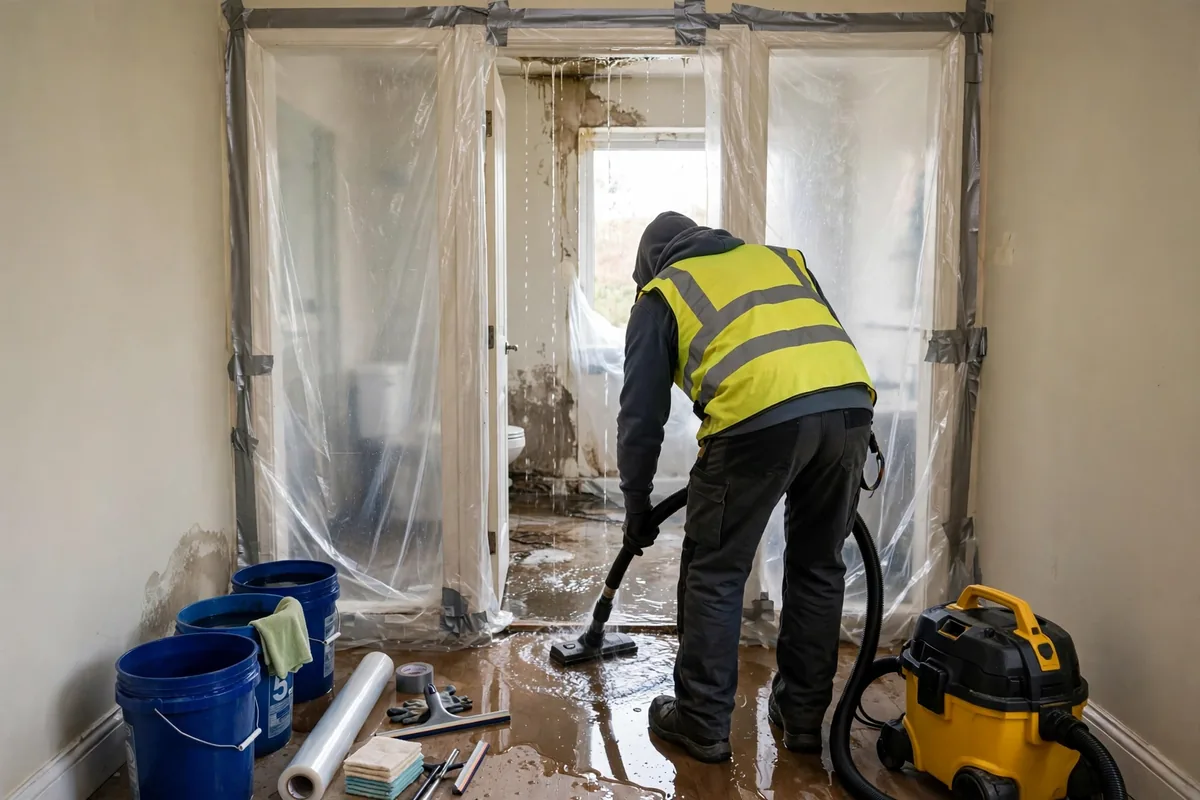
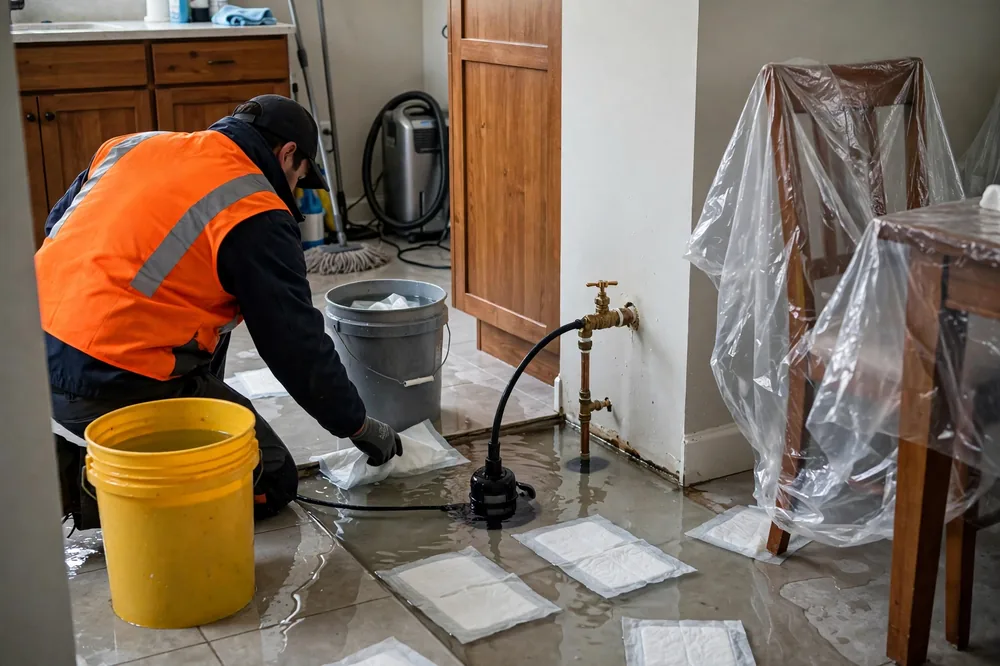
Mitigation begins the moment a crew arrives and is judged by one standard: did the loss stop growing? Its steps are source confirmation, safety checks, extraction of standing water, protection of unaffected areas and belongings, targeted removal of material that cannot dry, and placement of drying equipment. Its products are a stabilized loss, a moisture log, and a documentation packet.
Notice what mitigation does not include: no new drywall, no flooring, no paint. If a quote labels a full rebuild as 'mitigation,' the word is being used as decoration. Mitigation's endpoint is also specific — it ends when the structure is dry and stable, verified by readings, at which point the emergency is over even though the house is not yet repaired.
Where mitigation ends and restoration begins
Restoration picks up at mitigation's verified-dry finish line and runs through cleaning, sanitizing where needed, and the repair trades: drywall, flooring, cabinets, trim, paint. It ends at a walk-through of a home that reads as whole. The same company often performs both phases — that is normal and usually desirable — but they remain separate phases with separate completion tests, and your paperwork should show them separately too.
The cleanest way to hold the distinction: mitigation is measured in moisture readings; restoration is measured in finishes. One ends with a log, the other with a walk-through.
Why insurers and pros say "mitigation"
Homeowners policies generally require you to take reasonable steps to prevent further damage after a loss — and mitigation is literally the industry's name for those steps. When an adjuster examines a claim, the mitigation record is what they study first: how fast it started, whether extraction and drying were documented, whether the loss was stabilized before repairs. A prompt, well-logged mitigation phase is the strongest evidence that the homeowner and the pro both did their parts.
That is also why pros separate the phases in documentation even when one crew does everything. The claim file wants a mitigation story and a repair story, in that order, each with its own dates and evidence.
What happens when mitigation is skipped or delayed
The failure mode is consistent. Water left unmitigated keeps wicking into drywall, flooring systems and framing; materials that fast drying would have saved cross the line into removal; mold finds the cavities that stayed wet past the second day. The eventual restoration is then bigger — more demolition, more replacement, more time — and the claim conversation is harder, because the gap between the loss and the response is right there in the dates.
In Tennessee's humidity the delay penalty runs faster than in dry climates. A wall that might forgive three slow days in Arizona does not forgive them in a Memphis August. The state's pros repeat 'same day' so often because the climate, not salesmanship, sets that clock.
A Tennessee example walk-through
Take a common case: a supply line splits at night in a Murfreesboro slab home and runs until morning. The plumbing repair — replacing the line — belongs to neither word; it is plumbing. Mitigation is the same-day work: water extracted from three rooms, baseboards lifted, cavity drying started, flooring assessed, readings logged. Restoration is what follows the dry verification: the section of engineered floor that did not survive is replaced and laced in, baseboards reset, walls painted. One event, two phases, two finish lines — and a claim file that reads cleanly because each phase was documented as itself.
Get help with water damage in Tennessee
If you are dealing with this in your own home right now, the fastest useful step is the call. Tennessee Water Damage Help is a referral service: one call describes your situation once, and we connect the job with an independent local water damage professional who serves your part of Tennessee and confirms the scope with you before any work begins.