The honest short answer
Ask ten pros what water damage restoration costs and you will get ten ranges wide enough to drive a truck through. That is not evasion — it is arithmetic. A water job's price is the sum of its scope, and scope is set by five factors that vary enormously from a one-room clean-water leak to a contaminated whole-floor flood. This article walks those five factors so that when you do get a quote, you can read it: what is driving the number, what is legitimately uncertain, and where your own decisions move it.
One commitment up front: this page contains no invented figures. The factors are real; your numbers will come from the pro who walks your home and confirms the scope with you, which is the only place honest numbers live.
Factor 1: what kind of water it was
Pros classify water in three categories, and the category is the single largest cost lever. Clean water from a supply line allows drying-in-place for many materials and straightforward handling. Gray water — from appliances, aquariums, a failed drain — adds cleaning and judgment calls. Contaminated water, from sewage or flooding, changes everything: protective equipment, containment, disposal rules, and the removal of porous materials that clean water would have let you keep. Same room, same square footage, three very different jobs.
Factor 2: how much of the home it touched
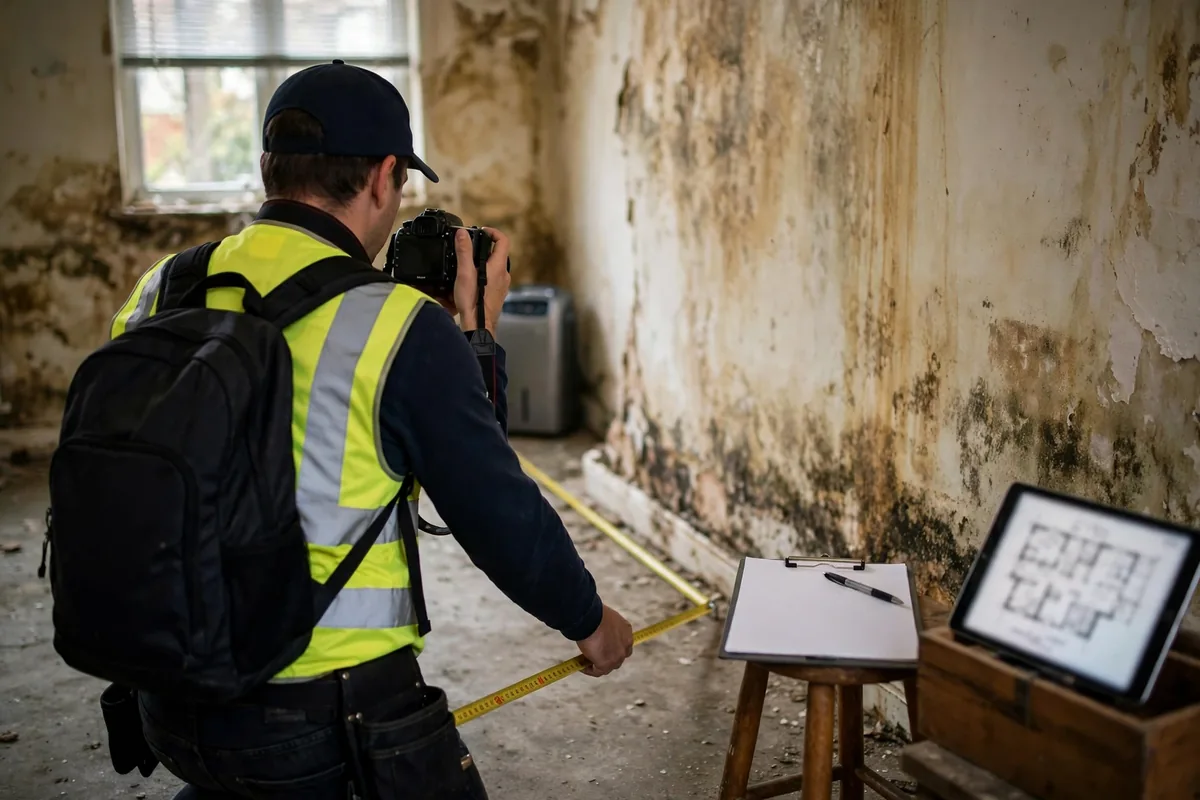
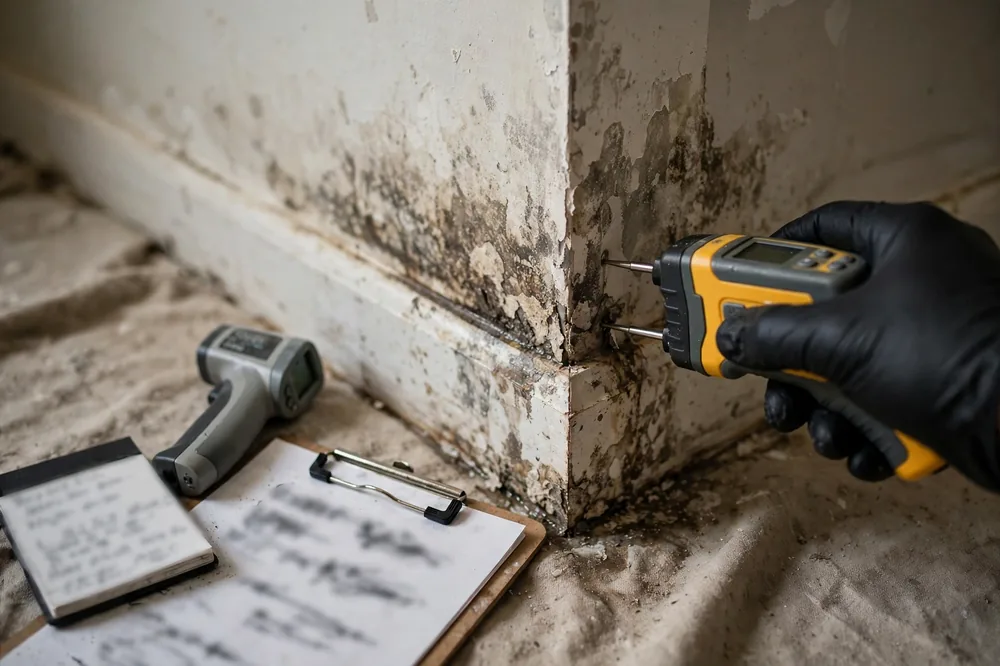
Scope is measured in rooms, materials and systems — and water is an explorer. A leak's visible room is often the smallest part of its footprint: the wall cavity behind it, the floor system below it, the room underneath. Moisture mapping on the first visit is what turns 'the bathroom got wet' into a true scope, and every additional assembly the map finds — a second wall, a ceiling below, a run of cabinets — adds its line to the work. This is why quotes given after readings exist are worth more than quotes given from a doorstep.
Factor 3: how long the water sat
Time is a cost factor wearing a disguise. Water that is extracted and dried on day one leaves most materials saveable; the same water on day four has wicked farther, swollen more, and started feeding mold in the cavities. The drying load is larger, the removal list is longer, and the repair phase inherits both. It is the main reason every page of this site repeats the same advice: call on day one — it is the single most cost-effective decision in the entire job.
Factor 4: what has to come out
Removal and disposal are real work with real constraints. Padding, drywall sections, insulation, flooring that cannot be saved — each has to be cut out carefully, bagged, hauled and, for contaminated material, handled under rules. Demolition done carelessly costs more later in damaged framing and broken finishes; demolition done well is surgical, documented, and limited to what readings condemn. When you compare two quotes, compare their removal lists — that is often where the honest difference lives.
Factor 5: the rebuild — finishes and matching
The repair phase prices like any finish work: it depends on what your home is made of. Builder-grade drywall and carpet rebuild differently from plaster walls, site-finished hardwood, custom cabinets and stone. Matching is its own cost — lacing new boards into an old floor, blending paint across a sun-faded wall, sourcing a discontinued tile. A pro should separate 'restore it to what it was' from 'this is the moment to change it' in the scope, so insurance-covered repair and your elective upgrades never blur into one number.
How insurance looks at the same scope
For a covered event, the claim typically follows the same structure the pro does: mitigation, then repair, each documented. Adjusters price from scope evidence — photos, moisture logs, removal lists — which is why the documentation habit matters financially, not just technically. Where homeowners lose money is rarely the rate; it is the undocumented item, the unphotographed room, the removal nobody recorded. A scope confirmed in writing before work begins protects both sides of that conversation.
How to keep a job from growing
You control more of the total than you might think. Start the same day. Keep the drying equipment running and the zone closed. Photograph before anything is disturbed. Decide finishes promptly so the repair phase never idles. And get the scope — phases, removal list, and what is excluded — confirmed in writing before work starts, from a pro who will walk you through which of the five factors is doing the heavy lifting in your number. A quote you can read is a quote you can trust.
Get help with water damage in Tennessee
If you are dealing with this in your own home right now, the fastest useful step is the call. Tennessee Water Damage Help is a referral service: one call describes your situation once, and we connect the job with an independent local water damage professional who serves your part of Tennessee and confirms the scope with you before any work begins.